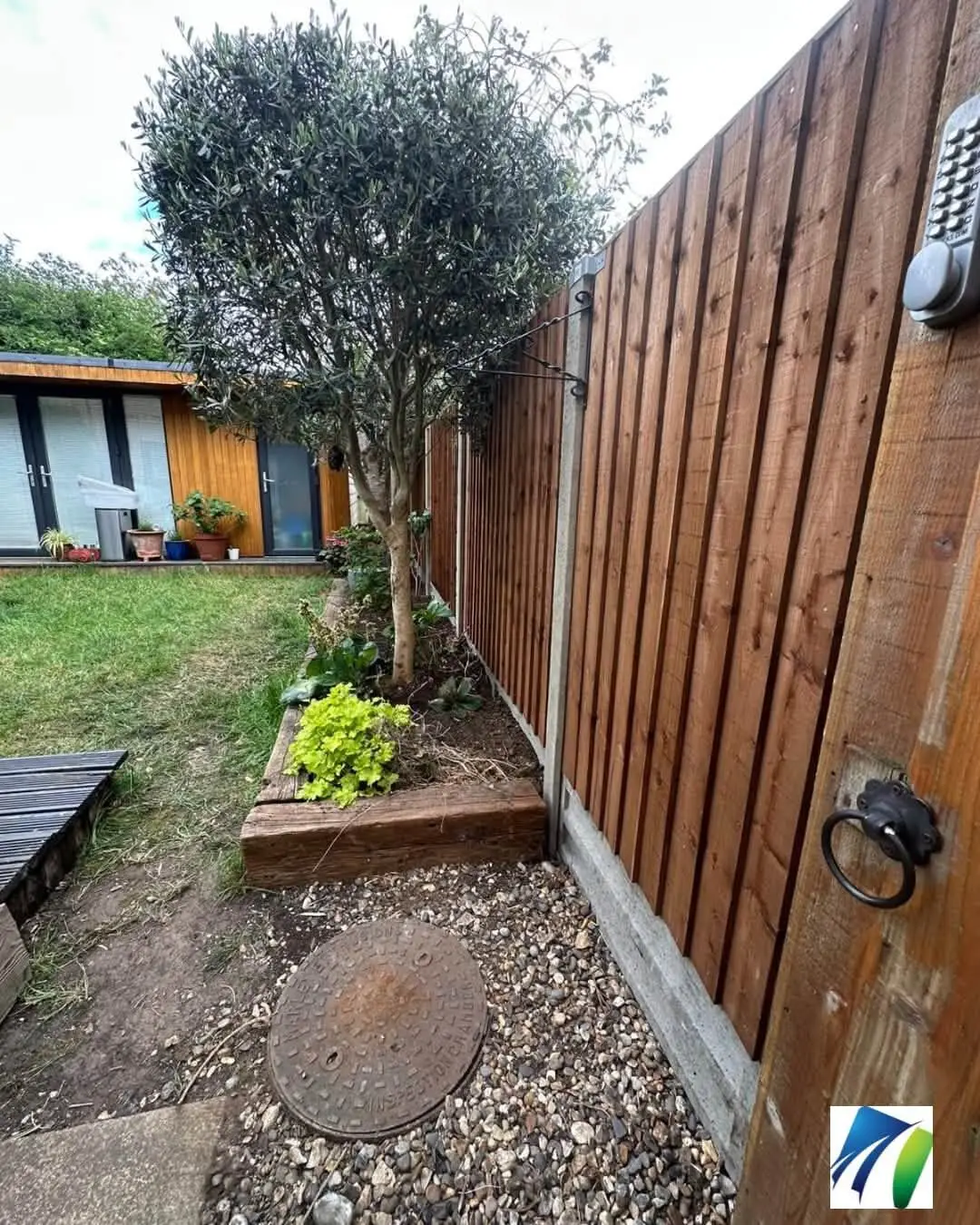
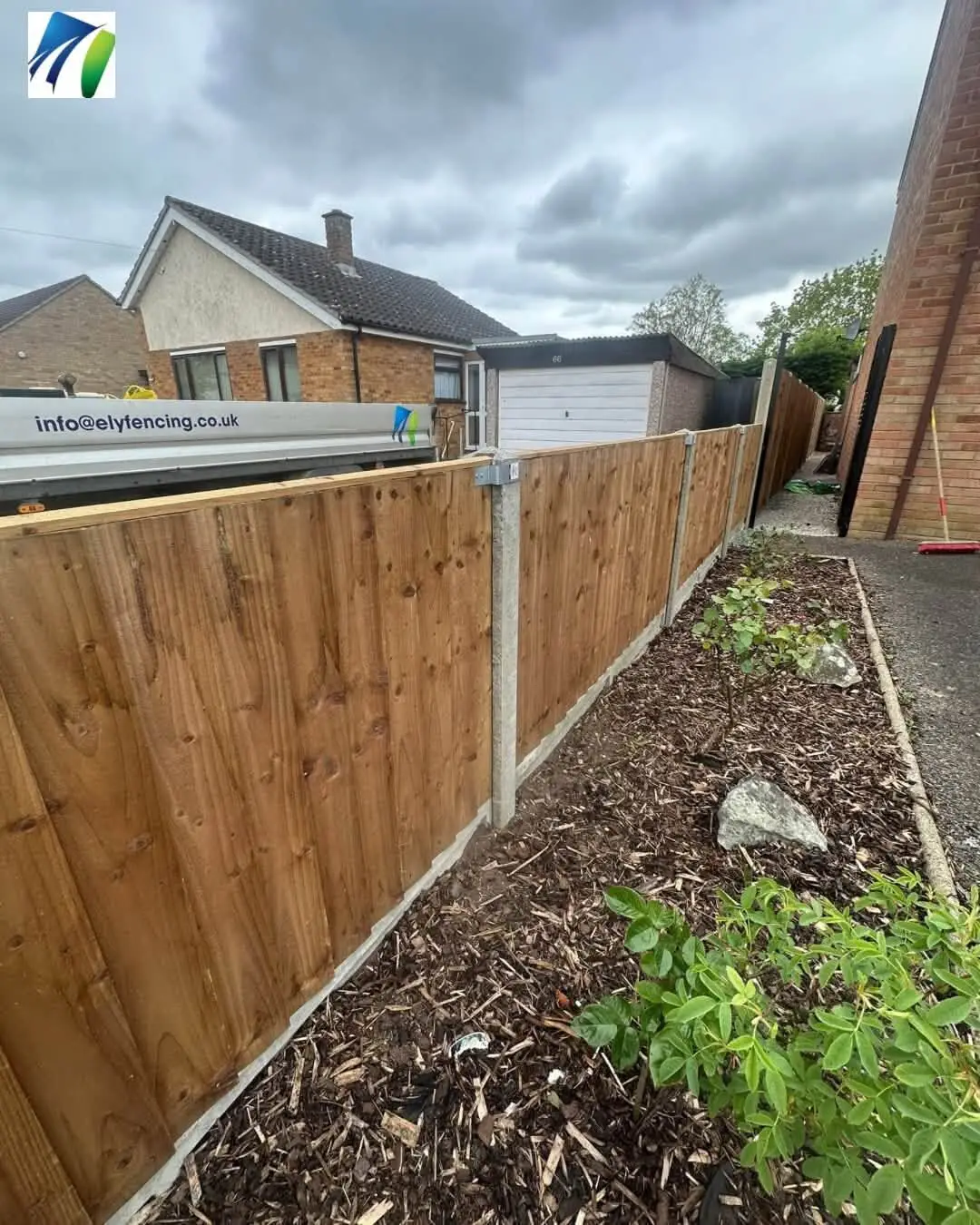
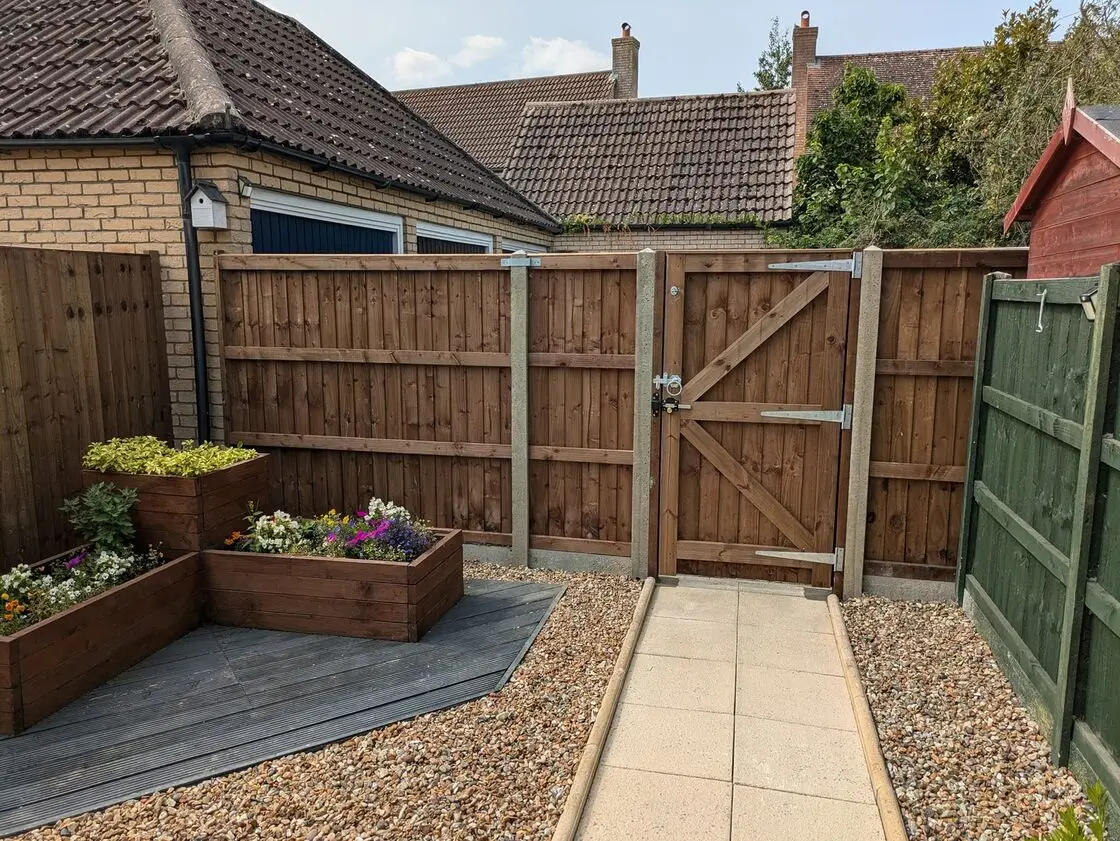
Looks the same from both sides. Wind passes through - so it is less likely to blow down on open Cambridgeshire sites.
Hit and miss fencing uses boards fixed alternately on opposite sides of the rails. From either neighbour's garden the gaps on one face are covered by boards on the other, so the fence looks finished both ways - and air can still move through.
That makes it a strong choice on exposed Fen boundaries where solid closeboard can catch the wind like a sail. It is also a good diplomatic option when both sides of the fence are on show.
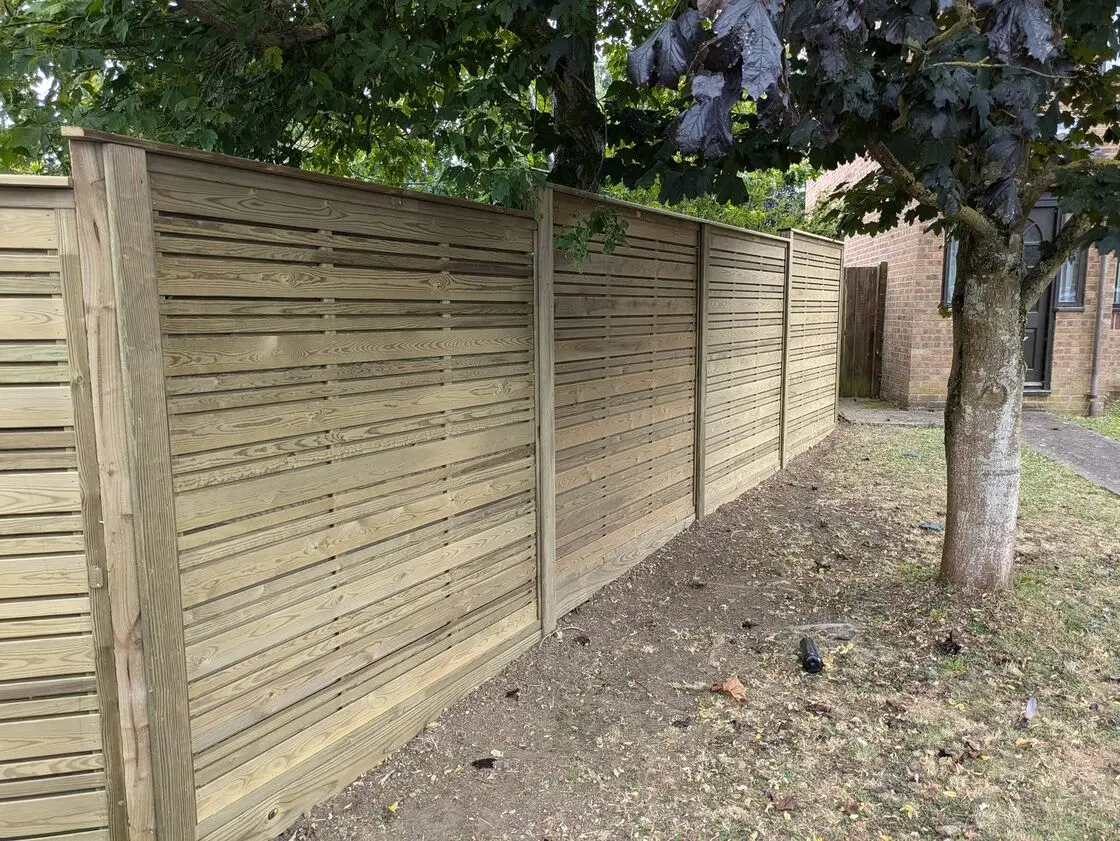
Hit and miss looks finished from both sides and lets wind through the gaps - so it is often a smarter choice than solid closeboard on exposed Fen sites.
Boards are fixed alternately on opposite sides of the rails, with small gaps between boards on each face. From either side those gaps are covered by boards on the other face - privacy with airflow.
Yes for normal viewing angles. You cannot see straight through. At a sharp angle you may glimpse light more than with solid closeboard, but for most gardens it reads as a solid boundary.
Vertical is traditional and matches most garden fencing. Horizontal (slatted) looks more contemporary. Wind performance is good on both when gaps are correct - choose mainly on appearance.
Usually yes. Solid closeboard catches more wind. Hit and miss lets air pass through, so posts take less force - useful on open Fen sites around Ely, Littleport and Soham.
Materials and labour are often similar because you still need posts, rails and a full run of boards. Ask for a like-for-like quote on your boundary - see also fencing prices.
Comparing options? These pages answer the common questions about each type we install.
Tell us the rough length and whether you prefer vertical or horizontal boards. Fixed written quote, no obligation.
We'll be back to you the same working day where we can.